Week 1: Two Cultures
My name is Karena Sanchez and I am a fourth year here at UCLA with a major in Sociology. I am what one would typically consider a humanities student, however I’d argue that Sociology dances the line between humanities and science as a highly variable and interdisciplinary field of study. Sociology, while it remains a very theoretical and social research-based field, is very similar to various fields of technology in that technology bridges the arts and sciences and is informed by science and philosophy, merging the arts, sciences, and humanities into a separate, “third culture” (Vesna, 2001). In this, sociology emerges as part of this third culture. The division between arts and sciences at UCLA, and in higher education more broadly, is stark and even transcends into physical markers of division, however has been exposed to us fairly early in our public education.
Like most of us, the different disciplines were always distinctly separated across the curricula of our public education journey. I remember taking a “STEAM” class in middle school, an attempt to merge the arts into traditional STEM teachings. However, the course’s curriculum failed to capture the intersection of the different fields and simply included an art unit along with science ones. Putting theory into practice is one thing but the integral piece of integrating the arts into stem through STEAM is that it is “not about taking a poetry course alongside a science course; it is considering Snow’s two cultures a unity” (Xanthoudaki, 2017). This is vital as artists are increasingly drawing from scientific methods and vice versa (Wilson, 2000).
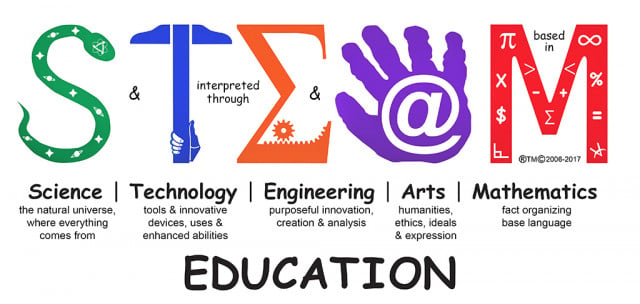
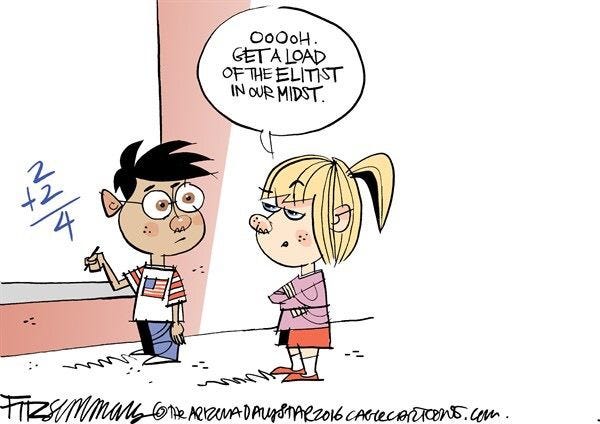
The concept of two cultures, being unnaturally separated, but also in reference to the division and disparity between the rich and poor, is an idea put forth as early as 1959 by C.P Snow (C.P. Snow, 1959). As a first generation student I am not only reminded of the stark division that exists across the two sides of our campus, but also the degree of elitism that exists across and within both disciplines.
Considering Snow’s adjacent ideas on the divisions between rich and poor, I’ve found that economic disparities work to fuel the division of the two cultures. Not only is it a perpetual debate about superior contributions, salaries, and prospects, both disciplines are incredibly stratified and elitist. Across the liberal arts, for example, higher education in these fields are dominated by the weather and more privileged (Altbach et al., 2001). Economic divides then, in accordance with Snow’s concept of two cultures, exacerbate the division of disciplines as many of us can attest to through our experiences of class differences and exclusion.
References Altbach, Philip G., et al. “In Defense of American Higher Education”. Johns Hopkins University Press, 2001.
Cambodianess. “STEAM Education and Its Significance” https://cambodianess.com/uploads/images/16150237777ttf7-steamedulogo-cat-desc27apr18.jpeg
DailyBruin. “Campus Consensus: North vs. South Campus.” YouTube, 28 Feb. 2019, https://www.youtube.com/watch?v=wpAcgEPkVk0 “In Defense of (some) Elitism – Capital and Conscience,” https://cdn-images-1.medium.com/max/800/1*xGkSl84wDggZf8q4aTfeFQ.jpeg?w=144 Snow, C. P. “The Two Cultures and the Scientific Revolution ; the Rede Lecture, 1959. Cambridge England, University Press, 1962, sciencepolicy.colorado.edu/students/envs_5110/snow_1959.pdf. Vesna, V. Toward a third culture: Being in between. Leonardo, 34(2), 121–125, 2001. https://doi.org/10.1162/002409401750184672 Wilson, S. “Myths and Confusions in Thinking about Art/Science/Technology” San Francisco State University, 2000. Xanthoudaki, Maria. "From STEM to STEAM (education): A necessary change or ‘the theory of whatever’." Spokes Review 28 (2017).

Comments
Post a Comment